


Coffee Bag Valve Placement and Common Degassing Problems
Coffee bag valve placement should be reviewed against the filled pouch, not just the empty bag drawing. A suitable location provides a flat installation area, clearance from zippers and heat seals, and an unobstructed gas path under the intended filling and handling conditions. When coffee bags swell, leak, or develop an irregular shape, the cause may involve valve position, installation quality, product contact, or the wider packaging system.
This guide helps coffee roasters, flexible packaging converters, and quality teams separate these problems before changing valve models or production settings. It focuses on practical inspection points, evidence to collect, and controlled checks that support a more reliable diagnosis.
Why Coffee Bag Valve Placement Matters
A degassing valve needs both a suitable installation surface and a clear gas path. Placing it across a fold, too close to a sealing jaw, or where product repeatedly presses against the inlet can make the packaging setup harder to control. Even a correctly specified valve may not perform as intended when its installation conditions are unsuitable.
Placement also affects how the pouch behaves after filling. An empty film panel can look flat but become curved, folded, or compressed when the bag stands upright or is packed into a shipping carton. For this reason, the review should include filled samples and the actual distribution arrangement.
- Check valve position on both the pouch drawing and a filled sample.
- Keep the installation footprint clear of folds, zipper tracks, and sealing transitions.
- Review whether beans, powder, or adjacent packaging can obstruct the gas path.
- Confirm the approved valve orientation and installation method with the supplier.
Common Coffee Bag Degassing Problems
Pouch Swelling After Packaging
Freshly roasted coffee continues releasing carbon dioxide after packing. A pouch may expand while pressure builds toward the valve’s opening point, so a slightly inflated bag does not automatically indicate failure. Persistent or excessive swelling, however, warrants investigation.
Record when the swelling first appears, how it changes over time, and whether it affects all bags or only selected batches. Compare roast-to-pack timing, fill weight, storage conditions, and valve installation records before attributing the problem to placement alone.
Uneven Bag Shape During Storage
Asymmetrical deformation may arise from product distribution, folds, carton compression, or inconsistent fill levels rather than a defective valve. Compare affected pouches with unaffected samples from the same run.
Check whether the irregularity follows a gusset crease, the valve installation area, or a contact point inside the shipping carton. The location of the deformation can help narrow the inspection.
Valve Area Leakage
“Valve leakage” can describe two different faults: gas passing around the valve-to-film attachment, or unwanted flow through the valve itself. These require different corrective actions.
Inspect the attachment perimeter for wrinkles, incomplete bonding, lifting, or local film damage. Separately evaluate valve reverse-leak performance using an appropriate test method. Intended outward venting should not be confused with an installation leak.
Slow or Unstable Gas Release
If a coffee bag valve appears not to be working, check whether the inlet or outlet is obstructed, the valve has been installed correctly, or the application process has damaged the component. Also confirm whether the available pressure is sufficient to open the valve under its specified operating conditions.
A gentle squeeze may provide an initial observation, but it does not establish opening pressure, flow capacity, or reverse-leak integrity. Those characteristics require suitable testing.
Powder or Oil Contact Around the Valve Area
Coffee fines and surface oils can reach the valve region during filling and handling. Visible contact is a reason to investigate, not proof that the valve has failed.
Review filling dust, valve position relative to the product, and the suitability of the filter configuration. Do not clean, lubricate, or modify a valve unless the supplier has approved that procedure.
Coffee Bag Valve Troubleshooting Checklist
| Packaging Symptom | Possible Cause | What to Inspect | Recommended Next Step |
|---|---|---|---|
| Persistent bag swelling | Restricted venting, unsuitable release performance, or changing gas load | Valve access, release test results, fill weight, and roast-to-pack timing | Compare affected and control samples before changing the packaging setup |
| Leakage around the valve | Incomplete attachment, wrinkling, or film damage | Attachment perimeter, installation settings, and laminate condition | Localize the leak and review the validated installation process |
| Uneven pouch shape | Bag geometry, inconsistent filling, or carton compression | Gusset folds, filled pouch profile, valve position, and carton contact | Check filled samples in their intended storage and shipping arrangement |
| Powder near the valve | Dust exposure or product contact with the inlet | Particle characteristics, filling conditions, and filter configuration | Review whether a filtered design and revised placement are appropriate |
| Poor retail appearance | Mismatch between fill level, pouch layout, and handling conditions | Bag dimensions, headspace, folds, and stacking pressure | Evaluate pouch layout and filling consistency together |
Where to Place a Coffee Bag Valve
Recommended Valve Position in the Pouch Headspace
An upper front or back panel is commonly considered because it can provide access to the pouch headspace and reduce continuous contact with the product. However, the appropriate position depends on the valve design, pouch geometry, filling level, and application equipment.
Treat headspace as part of the packaging review rather than a universal measurement. Verify the location with filled samples, including the way the bags will be laid down, stacked, or transported.
Clearance from Zippers and Heat Seals
Provide enough clearance for the complete valve attachment footprint and the installation tooling. The valve should not interfere with zipper operation, the final top seal, tear notches, or other functional features.
There is no single clearance dimension suitable for every pouch. Obtain the installation drawing and tooling requirements from the valve and equipment suppliers rather than applying an unsupported distance to every project.
Front Panel vs Back Panel Placement
Neither panel is automatically better. Compare flatness after filling, accessibility for installation equipment, artwork requirements, and the risk of external compression.
If the packaging design changes valve location from front to back, repeat the application checks. Equivalent visual space on the artwork does not necessarily mean equivalent installation conditions.
Positioning for Stand-Up and Bottom Gusset Bags
Review gusseted pouches in their expanded condition. A location that appears clear on a flat pouch can become distorted when the gusset opens and the bag takes its filled shape.
Avoid placing the attachment across a structural crease. Check whether the valve remains accessible to internal gas and whether its external outlet is compressed by neighboring bags or carton walls.
Coffee Valve Installation Checklist
Pouch Surface Condition
Inspect the installation area for dust, coffee residue, oil, moisture, and wrinkles. Contamination or uneven film can interfere with attachment, depending on the installation process.
Use the cleaning and handling procedure approved for the packaging materials. Unapproved solvents or surface treatments may create additional compatibility problems.
Material Compatibility
Confirm compatibility between the valve attachment structure, the pouch sealant layer, and the selected installation method. A general description such as “laminated film” is not enough to establish a validated process.
Share the laminate specification and intended filling conditions with the supplier. Do not assume that settings validated for one pouch material will transfer unchanged to another.
Sealing Area Condition
For heat-applied valves, review temperature, pressure, dwell time, tooling condition, and alignment against the approved process window. For adhesive-mounted designs, follow the specified surface preparation and application requirements.
Inspect for incomplete attachment, excessive deformation, and damage to the surrounding film. Changing one parameter at a time during trials makes it easier to identify the effect of each adjustment.
Filling Process Review
Check actual fill weight, product temperature where relevant, filling dust, and the distance between the product level and valve inlet. Confirm whether filling or final sealing exposes the valve to impact, compression, or contamination.
- Record valve batch, film batch, machine, shift, and installation settings.
- Retain affected and unaffected samples from comparable production conditions.
- Inspect finished pouches after filling, storage, and representative handling.
- Agree acceptance criteria before approving a revised setup.
Why a Coffee Bag Can Still Swell with a Valve
Product Gas Release Exceeds the Packaging Setup
Changing roast-to-pack timing, coffee formulation, or fill weight can change the conditions the packaging must handle. A previously acceptable setup should therefore be reviewed when the product or process changes.
Ask for valve release-performance information under stated test conditions. Physical diameter alone does not prove that one valve offers more flow than another.
Incorrect Valve Type for the Filling Material
A valve selected for whole beans may not suit a powder-rich application without further review. Product contact, coffee fines, and filter characteristics can influence the selection.
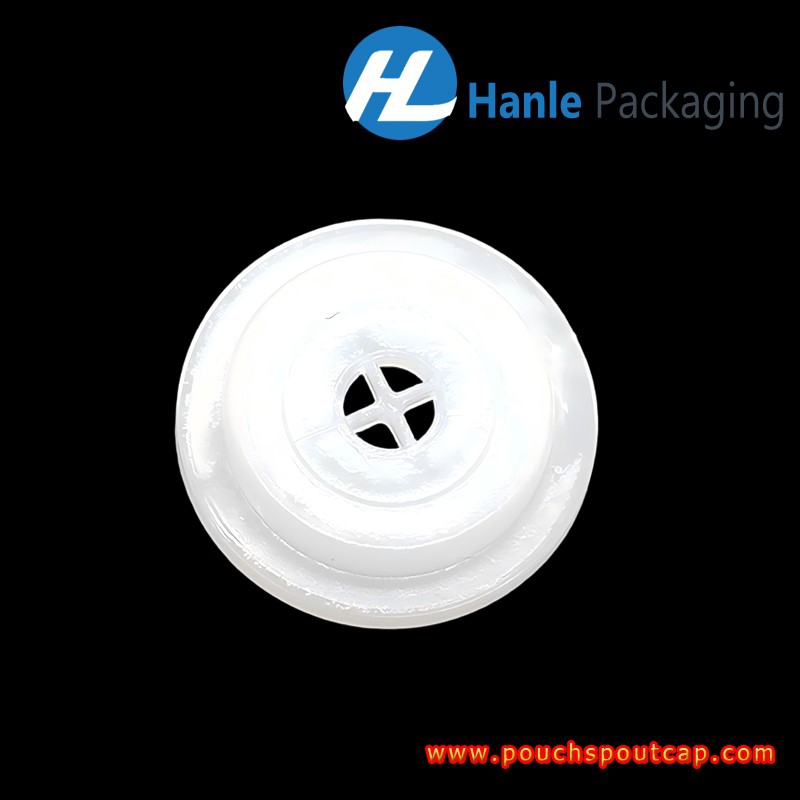
For a whole-bean application, the coffee bag one way valve for roasted coffee beans provides a filter-free product option for application assessment. Selecting a model is still separate from validating its installation on the finished pouch.
Poor Valve Installation or Seal Quality
A leaking attachment and a restricted outlet can produce different symptoms, so avoid treating every packaging complaint as the same valve fault. Localize the problem before replacing components.
Use separate checks for attachment integrity, intended outward release, and unwanted reverse leakage. AMETEK MOCON’s coffee packaging guide distinguishes valve leak testing from release testing, with release behavior assessed through pressure and flow measurements.
Limited Headspace or Incorrect Bag Structure
An overfilled pouch may leave little room around the valve inlet and may put the product in repeated contact with the valve. However, adding headspace is not a substitute for checking valve performance and seal integrity.
For larger formats, assess the complete filled package. A coffee degassing valve for 500g–2kg coffee bags can be reviewed as a dimensional option, but its published capacity range should not be treated as proof of a specific venting rate.
When to Use a Filtered vs Filter-Free Valve
Whole coffee beans and ground coffee create different particle-exposure conditions. Filter-free models can be evaluated for whole-bean packaging, while fine-particle products may benefit from a filtered configuration selected for the application.
Hanle Packing lists a coffee bags valve with filter for powder packaging. Before changing configurations, confirm the filling material, filter suitability, and finished-package performance with the supplier.
A filter is not a cure for poor installation, and it should not be assumed to block every oil or particle. Filter material, particle retention, and gas-flow performance require supporting specifications.
A Practical Troubleshooting Flow
Identify the symptom and affected production batches
                         ↓
Compare filled pouches with unaffected control samples
                         ↓
Inspect placement, folds, inlet access, and external obstruction
                         ↓
Localize attachment leaks separately from valve-path faults
                         ↓
Review release performance and reverse-leak test results
                         ↓
Change one confirmed variable and repeat package testing
                         ↓
Document results before approving production changes
Typical Troubleshooting Scenario
The following is an illustrative investigation scenario, not a documented customer case or a claim of measured improvement.
Background
A packaging converter supplies stand-up zipper pouches for roasted coffee beans. Some filled bags develop uneven expansion after carton storage.
Packaging Symptom
The affected pouches show local distortion near an upper fold, while other samples from the same project appear less distorted.
Inspection Focus
The proposed investigation compares valve coordinates, zipper clearance, filling levels, attachment quality, and carton contact. Valve release and reverse-leak checks are assessed separately.
Corrective Action
If inspection confirms interference at the valve area, the converter trials a revised pouch layout while keeping the coffee, film, and filling conditions consistent. Filled samples are then evaluated under representative storage and handling conditions.
Result
The required outcome is evidence that the revised arrangement meets agreed release, leak-integrity, and appearance criteria. No improvement should be claimed until the comparison has been completed and recorded.
Frequently Asked Questions
What is the best coffee bag valve placement?
A suitable position provides a flat attachment area, adequate functional clearance, and access to the internal gas space. Upper front or back panels are common starting points, but the final location must be verified on the filled pouch.
Does a swollen coffee bag mean the valve has failed?
No. Swelling can involve ongoing degassing, valve opening characteristics, restricted flow, fill level, or storage conditions. Investigate the pattern and test the package before identifying the cause.
Can squeezing the pouch prove that the valve works?
It may show outward venting, but it cannot establish reverse-leak integrity or a specified opening pressure. Use appropriate release and leak tests for acceptance decisions.
Is there a standard distance from the valve to the zipper?
No universal distance applies to all valve and pouch designs. Use the supplier’s installation drawing, tooling footprint, and closure-clearance requirements.
Should a leaking valve simply be replaced with a larger model?
Not without diagnosis. A larger component will not necessarily correct an attachment defect, unsuitable film, blocked outlet, or reverse leakage.
What should a packaging team provide for technical review?
Provide pouch drawings, filled-sample photographs, laminate details, valve identification, fill weight, roast-to-pack timing, installation settings, affected batch records, and available test results.
Resolving the Cause Before Changing the Valve
Effective coffee bag valve troubleshooting separates placement, attachment, release performance, and package integrity. Start with the actual filled pouch, preserve comparable samples, and validate changes through controlled testing. This approach helps packaging teams address the cause rather than repeatedly changing valve models without evidence.