


Filtered vs Filter-Free Coffee Valves: How to Choose
The filtered vs filter free coffee valve decision starts with the product inside the pouch. Ground coffee and fine-particle products require closer attention to powder reaching the valve path, making a filtered configuration an important option to evaluate. Whole roasted coffee beans and selected larger granulated products may suit a filter-free configuration, provided the filling conditions and finished package support that choice.
Neither configuration is automatically better for every application. A filter layer addresses particle exposure; it does not replace correct valve installation, suitable pouch materials, or package testing. Likewise, removing the filter does not automatically produce better gas release. This coffee valve selection guide explains how to compare the two configurations and then narrow the choice by pouch structure, package capacity, available panel space, and sample evaluation.
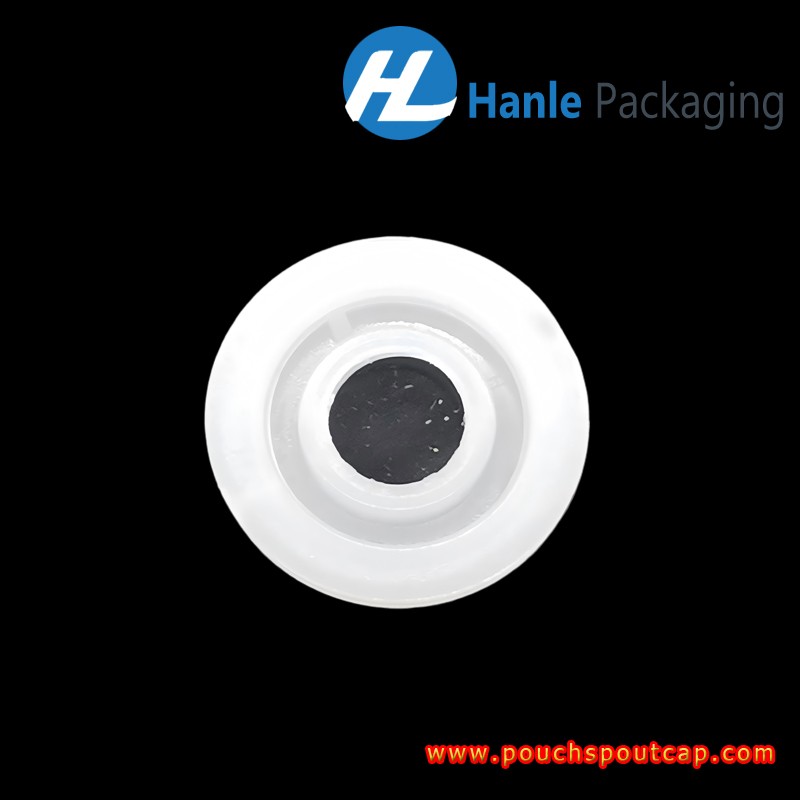
Why Filter Configuration Matters in Coffee Packaging
A one-way coffee valve provides an outward path for gas released inside a sealed pouch while helping restrict reverse airflow. The filter configuration concerns a different part of the application: how the packaged material interacts with the valve inlet and internal gas path.
Fine particles can move during filling, transport, and handling. If they reach sensitive valve areas, they may affect performance, depending on the valve design and exposure conditions. A filter provides an additional barrier intended to reduce particle entry. Its suitability still depends on the actual powder and the filter characteristics.
Whole beans present a different starting point, but they are not necessarily free of dust or fragments. Selection should therefore reflect the material as packed, rather than relying only on a product description such as “whole bean” or “ground coffee.”
What a Filtered Coffee Valve Is Designed For
Coffee Powder and Fine Particle Packaging
A coffee valve with filter is worth evaluating when the product contains fine particles that could reach the valve path. Ground coffee, coffee powder, and selected powder-based products are common applications for this review.
The filter is an added particle-management feature, not a guarantee against every contamination condition. Without supporting specifications, it should not be described as dust-proof, oil-proof, or capable of retaining every particle size. Powder suitability and gas-release performance both need confirmation.
Powder Movement Inside Flexible Pouches
Powder exposure is not limited to the filling step. A pouch may be turned sideways, stacked, compressed, or repeatedly handled after sealing. Material that initially sits below the valve can move toward it during distribution.
Evaluate the finished package in representative orientations. Review whether filling generates dust around the inlet and whether settling changes the product level. A clean-looking valve area immediately after filling does not establish its condition after transport.
When a Filter Layer Should Be Considered
A filter layer deserves particular attention when fine material can contact the valve, when the product produces noticeable filling dust, or when a previous packaging trial shows particle-related concerns. These observations justify reviewing a filtered option rather than assuming that position alone will prevent contact.
- Identify the product’s particle characteristics and the presence of fines.
- Review potential contact during filling, storage, and transport.
- Request relevant filter and valve performance information.
- Evaluate the selected configuration with the actual product and pouch.
What a Filter-Free Coffee Valve Is Designed For
Whole Roasted Coffee Beans
A coffee valve without filter can be considered for whole roasted coffee beans where the material and filling conditions are suitable. The absence of a filter does not remove the one-way function; it means the configuration does not include the additional filter layer.
When reviewing a coffee valve for coffee beans, check the amount of loose dust and broken material in the filled package. A low-fines whole-bean product and a batch containing substantial fragments should not automatically be treated as identical applications.
Granulated Products
Selected granulated materials may also be compatible with filter-free valves, but “granulated” is not enough information by itself. A larger particle size can coexist with dust generated during processing or handling.
Confirm that the product actually requires gas release, then review particle exposure and material compatibility. Suitability for roasted beans should not be transferred automatically to another food, feed, or granulated product without an application assessment.
Pouch Layout and Valve Placement Considerations
Filter-free selection should include a review of the valve inlet, product level, and pouch geometry. A flat installation area and an accessible gas path matter regardless of whether a filter is present.
Positioning may reduce continuous product contact, but it cannot ensure that the valve remains untouched in every shipping orientation. Review filled samples, not just the empty pouch drawing.
Filtered vs Filter-Free Coffee Valve Comparison
Filtered vs Filter-Free Coffee Valve Selection Table
| Selection Factor | Filtered Coffee Valve | Filter-Free Coffee Valve |
|---|---|---|
| Typical product | Ground coffee, coffee powder, and selected powders such as flour, subject to application review | Whole coffee beans and selected larger granulated products |
| Particle-management need | Generally receives greater attention because fine particles may reach the valve path | May be lower, depending on fines, fragments, and filling conditions |
| Filter layer | Included | Not included |
| Example Hanle model | HL-TA | HL-TB, HL-TC, HL-TAW |
| Key selection check | Powder characteristics, filter suitability, gas-release performance, and pouch structure | Bean or granule characteristics, pouch layout, panel area, capacity, and gas-release performance |
| Common mistake | Assuming a filter eliminates the need for placement and performance checks | Selecting a filter-free design for a powder-heavy application without particle-exposure review |
Filling Material
Begin with the product in its actual packed condition. Record whether it consists of whole beans, coarse grounds, fine coffee powder, or a mixture containing fines. Where practical, provide a representative product sample for evaluation.
Powder and Particle Exposure
Review both particle size and the likelihood of contact. A relatively coarse product can still produce loose dust, while a fine product may repeatedly cover the valve inlet during handling. Product name alone does not describe that exposure.
Pouch Type
Stand-up, zipper, bottom gusset, and flat-bottom formats offer different panel layouts and folding patterns. Neither configuration belongs exclusively to one bag type. Confirm the selected model’s stated applications and the installation conditions on the finished pouch.
Valve Size
Published diameter is only one dimensional reference. Confirm whether it describes the inner diameter, body diameter, or another feature, and obtain the complete installation drawing. A quoted inner diameter does not necessarily define the required attachment footprint.
Packaging Capacity
Fill weight helps narrow the options, but it does not independently establish valve performance. Two pouches holding the same weight may differ in dimensions, headspace, roast-to-pack timing, and handling conditions. Treat capacity ranges as application guidance rather than a flow rating.
Project Review Requirements
Both configurations require a coherent review of the product, pouch laminate, installation method, and expected distribution conditions. Request relevant release-performance and reverse-leak information, along with filter characteristics where applicable. Compare results obtained under clearly stated conditions.
Coffee Valve Selection by Product Type
Ground Coffee and Coffee Powder
For ground coffee, the first question is whether fines can reach and affect the valve path. Review grind characteristics, filling dust, product level, and the way the pouch will be transported. These factors help determine whether a filtered design is appropriate.
Hanle Packing’s 18.9mm coffee bags valve with filter is an option for powder-containing laminated pouches. The integrated filter makes it relevant to this assessment, but final suitability still depends on the powder characteristics and packaging process.
Selecting a coffee powder packaging valve should not end with confirming that a filter is present. Evaluate the actual sample for attachment quality, gas release, and package integrity after representative handling.
Whole Roasted Coffee Beans
For whole beans, a filter-free configuration can be a reasonable starting point when particle exposure is acceptable. Confirm the presence of broken beans and fines, then check that the proposed valve fits the pouch layout and installation process.
The 21.7mm coffee bag one way valve for roasted beans is a filter-free option for whole-bean packaging review. Its intended application provides a starting point, not a substitute for validating the finished pack.
A coffee bag one way valve should be evaluated under the actual filling and storage conditions. If those conditions change, review whether the original selection remains suitable.
Large Coffee Bags from 500g to 2kg
Larger bags require attention to product quantity, pouch dimensions, available installation area, and handling arrangements. Do not select a valve simply because it is the largest available or because its diameter appears proportional to bag weight.
The 22.4mm coffee degassing valve for 500g–2kg bags is a filter-free option positioned for this capacity range. Review it against the actual coffee product, panel area, and packaging conditions.
Its nominal capacity range does not prove a particular opening pressure or flow capacity. Those characteristics require separate technical information and appropriate evaluation.
Stand-Up and Bottom Gusset Pouches
For stand-up zipper pouches and bottom gusset bags, review the expanded package rather than the flat artwork alone. Confirm the attachment footprint, clearance from folds and closures, and access to the internal gas space.
The 19.8mm coffee valve for flexible coffee pouches is a filter-free option listed for these formats. Its suitability still depends on the filling material, laminate, placement, and installation method.
Bag format should not override product requirements. Ground coffee in a stand-up pouch still needs a particle-exposure review before a filter-free model is chosen.
Common Selection Mistakes
Selecting a Filter-Free Valve for Fine Powder
The mistake is not that every powder application must use the same filtered design. It is selecting a filter-free valve without assessing particle exposure or obtaining evidence that the configuration is suitable.
When fine powder is present, review a filtered option early. Resolve uncertainty through representative samples and relevant performance information rather than relying on visual similarity between valves.
Selecting by Diameter Only
A larger published diameter does not establish better flow, stronger sealing, or greater suitability for powder. Different internal designs and filter arrangements can have different performance characteristics.
Use dimensions to confirm physical fit, then use technical evidence to evaluate function. These are related but separate selection tasks.
Ignoring Pouch-Panel Space
A valve may fit within the artwork but conflict with a fold, zipper, or installation tool. The complete attachment footprint needs a suitable surface, not just enough space for the visible valve body.
Review drawings with the packaging converter and inspect filled samples. If the valve location changes, repeat the relevant application checks.
Ignoring Bag Capacity and Filling Conditions
Copying a successful valve choice from another project can overlook differences in fill weight, product dust, pouch material, and roast-to-pack timing. A similar-looking bag does not necessarily represent the same operating conditions.
Document the conditions behind an approved selection. This gives the team a basis for deciding when a product or process change requires further testing.
Coffee Valve Selection Flowchart
What Is Being Packed?
          |
          +-- Coffee Powder or Fine Particle Product
          |        |
          |        v
          |   Review Filtered Coffee Valve Option
          |
          +-- Whole Coffee Beans or Granulated Product
                   |
                   v
              Review Filter-Free Coffee Valve Option
                   |
        Both Routes Continue Below
                   |
                   v
Confirm Pouch Type and Valve Placement Area
                   |
                   v
Confirm Package Capacity
                   |
                   v
Confirm Valve Diameter and Installation Footprint
                   |
                   v
Evaluate Samples with the Actual Product and Pouch
This flowchart identifies the starting configuration, not an automatic approval. Significant fines, unsuitable placement, or unsatisfactory test results may require the team to revisit the initial choice.
Coffee Valve Selection Checklist
Prepare a concise application record before comparing samples. This helps keep the decision focused on packaging requirements rather than model names.
- Filling material: whole beans, ground coffee, fine powder, or another gas-releasing product.
- Particle exposure: loose fines, broken material, filling dust, and likely contact during distribution.
- Filter requirement: intended particle-management function and available supporting data.
- Pouch format: stand-up, zipper, bottom gusset, flat-bottom, or another defined structure.
- Panel layout: complete attachment footprint, closure clearance, folds, and gas-path access.
- Package capacity: target fill weight, actual dimensions, product level, and headspace.
- Process conditions: laminate construction, installation method, and relevant filling conditions.
- Performance review: outward release, reverse leakage, and attachment integrity.
- Sample plan: representative product, storage and handling conditions, controls, and acceptance criteria.
During trials, keep unrelated variables consistent where possible. If the valve configuration, pouch material, and fill weight all change together, it becomes difficult to determine which change caused the result.
If samples show swelling, uneven shape, or suspected leakage, investigate the failure before assuming the filter configuration is responsible. The coffee bag valve troubleshooting guide explains how to separate placement, attachment, and gas-release concerns.
Frequently Asked Questions
What is the main filtered vs filter free coffee valve difference?
A filtered valve includes an additional layer intended to reduce particle entry into the valve path. A filter-free valve does not include that layer. Both can use a one-way degassing structure; suitability depends on the filling material and finished packaging system.
Does all ground coffee require a filtered valve?
Ground coffee warrants a filter review because it contains particles that may contact the valve. The final decision depends on grind characteristics, exposure, valve design, and testing. Avoid approving a filter-free option for powder without supporting application evidence.
Can a filtered valve be used for whole coffee beans?
It can be evaluated, but a filter is not automatically necessary or beneficial for every whole-bean package. Confirm why the filter is needed and whether the complete valve meets the application requirements.
Does a filter protect against coffee oil?
Do not assume so. A filter described for particle management should not be treated as an oil barrier without relevant specifications. Review oil exposure separately with the valve provider.
Does a filter-free valve release gas faster?
Not necessarily. Filter presence alone cannot establish opening pressure or flow performance across different designs. Compare relevant data under stated test conditions rather than inferring performance from configuration.
Can one valve cover several bag sizes?
Possibly, but each intended application needs review. Confirm the product, pouch layout, fill weight, installation conditions, and performance requirements across the range. A broad nominal capacity range is not blanket approval for every package.
Choose the Configuration Before Finalizing the Model
Start with particle exposure: filtered options deserve attention for coffee powder and other fine-particle products, while filter-free options can be considered for suitable whole-bean and granulated applications. Then confirm pouch geometry, capacity, dimensions, and installation compatibility.
The final decision should rest on representative samples and defined acceptance criteria. This keeps filter selection tied to the actual packaging problem instead of treating one configuration as universally superior.